The Blood Bank at St. Luke’s Hospital dealt with 1,492 requests for blood transfusions and 1,530 bottles were used during the mentioned year, 528 bottles were obtained from the Sovereign Military Order of Malta.
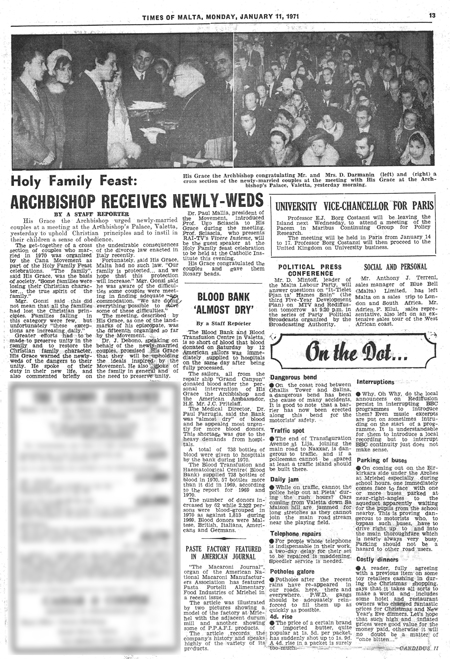
‘Blood Bank Almost Dry’ A staff reporter states that:- ‘The Blood Bank and Blood Transfusion Centre in Valletta is so short of blood that the director Dr. P. Farrugia described as “Almost dry”‘, (Times of Malta, 11th January, 1971).
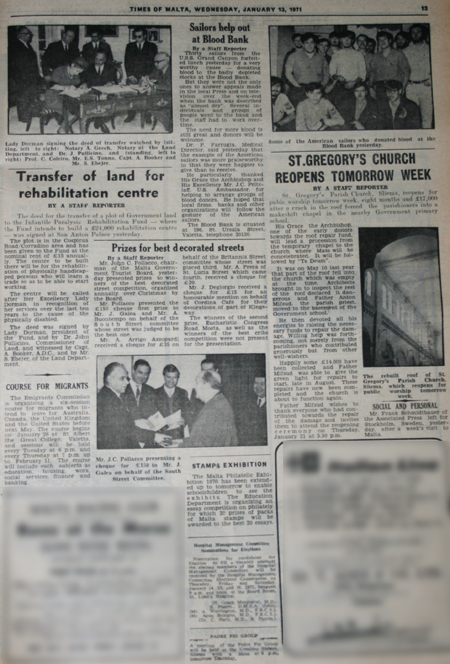
About two days later it was reported that 30 sailors from the U.S.S. Grand Canyon forfeited lunch for a very worthy cause – donating blood to the badly depleted stock at the blood bank, (Times of Malta, 13th January, 1971).
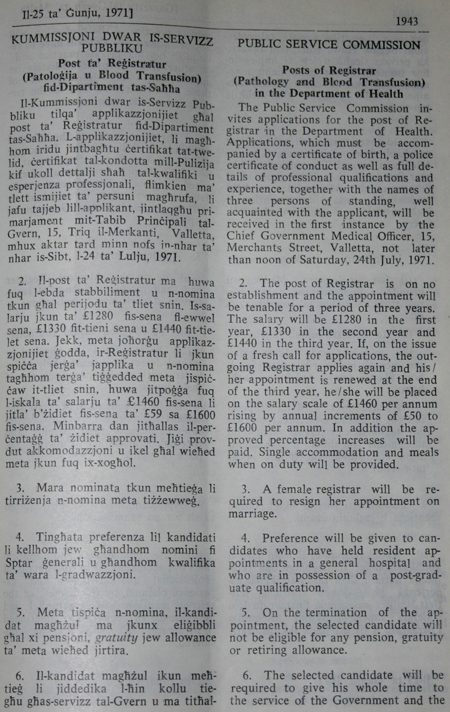
A Post of Registrar Pathology and Blood Transfusion to work at St. Luke’s Hospital was issued. The call for applications stated that the post will be tenable for a period of three years. On termination of appointment, candidate will not be eligible for any pension, gratuity or retiring allowance. If it will be a female she will be required to resign her appointment on marriage, (Government Gazette, 25th June, 1971).
1971
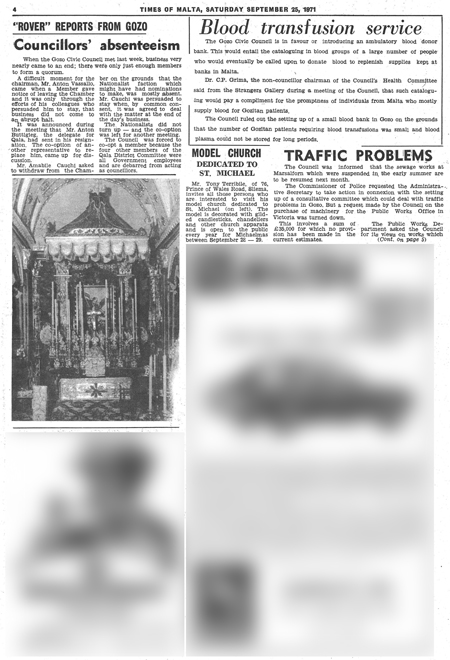
The Gozo Civic Council was in favour of introducing an ambulatory blood donor bank, (Times of Malta, 25th September, 1971).
1973
The blood bank of Sovereign Military Order of Malta passed completely into the hands of the Grand Magistry of Rome. Its first director was Dr. Paul Farrugia.
1974
Sovereign Military Order of Malta Blood Bank moved to Floriana. Blood Bank Centre at Floriana, Appeal for blood ‘As from today the blood bank will operate from their new premises at Europa Centre, Floriana 2nd floor (ex-Nato Buildings).
The Medical Director Dr. P. Farrugia takes the opportunity to invite blood donors to come forward to donate blood, as the demand is greater than the supply. Special parking space is reserved for blood donors, (Times of Malta, 25th January, 1974).
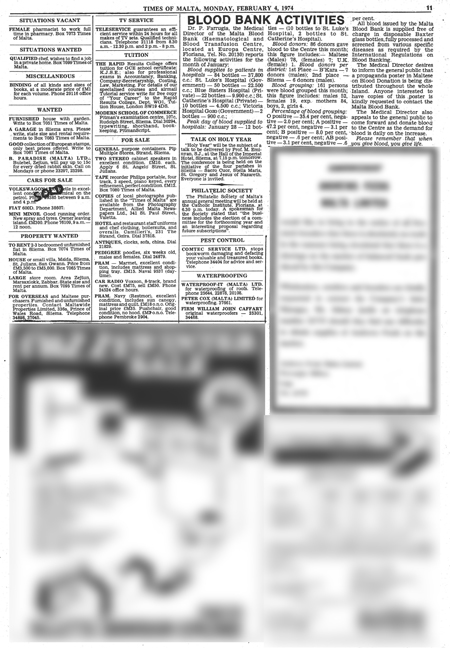
The Medical Director Dr. P. Farrugia in February, informed the general public that a propaganda poster in Maltese on Blood Donation was being distributed throughout the whole island, anyone who was intrested could contact the blood bank, (Times of Malta, 4th February, 1974).
Late 1970’s,
As a result of events in the health system in the late 1970’s, the government employed a number of foreign doctors in the various areas of St. Luke’s Hospital. These included a Czech transfusionist -Dr. Jiří Rondiak – in the blood transfusion unit of the Pathology department headed by Professor George Xuereb. Dr. Rondiak was very interested in upgrading the unit, which at the time consisted of three people, himself, a nurse and a technician. The unit was sited in two small rooms, one of which was used to collect and store blood, the other to do lab tests. There were no facilities for confidential donor interviews, component manufacture or most of the things which, even then, were associated with transfusion.
1975
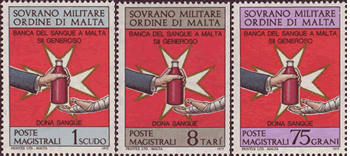
The Sovereign Military Order issued a set of stamps which commemorates the blood bank in Malta.
A Blood Donor’s Birthday Club was established by Sovereign Military Order of Malta on the initiative of the Medical Director Dr. P. Farrugia.
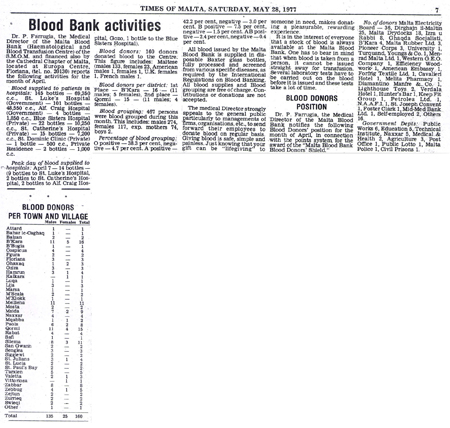
In the report that Dr. P. Farrugia gave in May of the mentioned year, he encourages the general public, particularly managements, firms and organizations to send forward their employees to donate blood on regular basis. He also mentions a scheme which awarded points to blood donors for donating blood with the name “Malta Blood Bank Blood Donors’ Shield”, (Times of Malta, 28th May 1977).
1979
The hospital hired a number of University of Malta science graduates as analysts to work in the pathology laboratories. One of these – Dr. Albert Farrugia – was assigned to the blood transfusion unit. He was trained by Dr. Rondiak in immunohaematological techniques, and as a result, tube blood grouping, the immunogobulin test and antibody screening were introduced, as well as full cross-matching.
1981
Dr. A. Farrugia took an interest in blood products and in 1981 went to the United Kingdom to do a PhD on the manufacture of Factor VIII by blood banks at the University of Edinburgh, working in the blood transfusion service based in the Royal Infirmary.
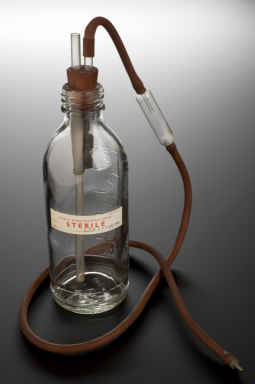
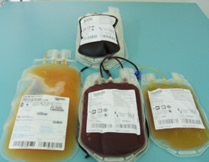
During the mentioned year, the blood bank has introduced the disposable plastic bags instead of the disposable glass bottles, which use was totally stopped in November of the same year.
1984
Upon his return, Dr. A. Farrugia was appointed Head of the Blood Transfusion Unit. At this time AIDS became an issue in Malta and funds were made available for the expansion of the unit.
1986
The former nuns’ quarters at St. Luke’s Hospital, were totally turned over to the unit and a major program of refurbishment led to the official opening of the new centre. Blood collection at the centre was expanded, to decrease the dependence on the private blood bank. The department also introduced new disposable plastic bags for blood storage, allowing the production of the basic components – red cells, plasma, platelets and cryoprecipitate during this time.
In addition, safety testing was introduced for HIV and HBsAg; the latter had been screened with an immunoelectropheresis technique which work later showed, was less sensitive than expected. The staff was greatly expanded and training programmes in all aspects were established.
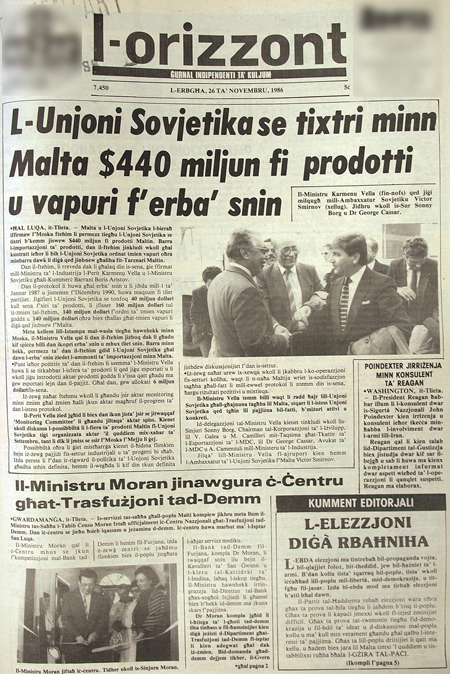
On the 26th November, 1986, the Minister of Health Dr. Vincent Moran officially opened the National Blood Transfusion Centre at G’Mangia, in the premises of St. Luke’s Hospital. The centre was to collect, examine and distribute blood and blood products to hospitals. Dr. V. Moran in his speech for the occassion stated that since AIDS can be transmitted through blood, the government has taken all the nessecary precautions so that all blood and blood products will be examined before given to the patients. So the general public should rest assured that all blood and it’s products are safe (l-Orizzont, 26th November, 1986).
In 1987
Dr. A. Farrugia took up a position in Australia and ultimately became an international authority in transfusion. Dr. K. Rondiak worked in Czechoslovakia and was active in the change which saw the emergence of the Czech Republic.
1988
The Maltese Blood Donors Association or “Ghaqda Donaturi tad-Demm” was set up. During this year the first Malta seminar on Blood Donation and Blood Transfusion was held on the occasion of World Blood Donors Day.
Modern equipment was installed and brought to this department. These included three automated plasmapheresis machines capable of collecting specific blood components from donors; these are also useful for therapeutic plasma exchange and therapeutic cytapheresis on patients.